
01
Non-invasive examination
Ultrasound creates images from outside the body and normally does not require a surgical procedure.
Non-invasive diagnostic imaging for cats, dogs and other pets. Ultrasound allows our veterinary team to examine internal organs and investigate health concerns without using radiation.
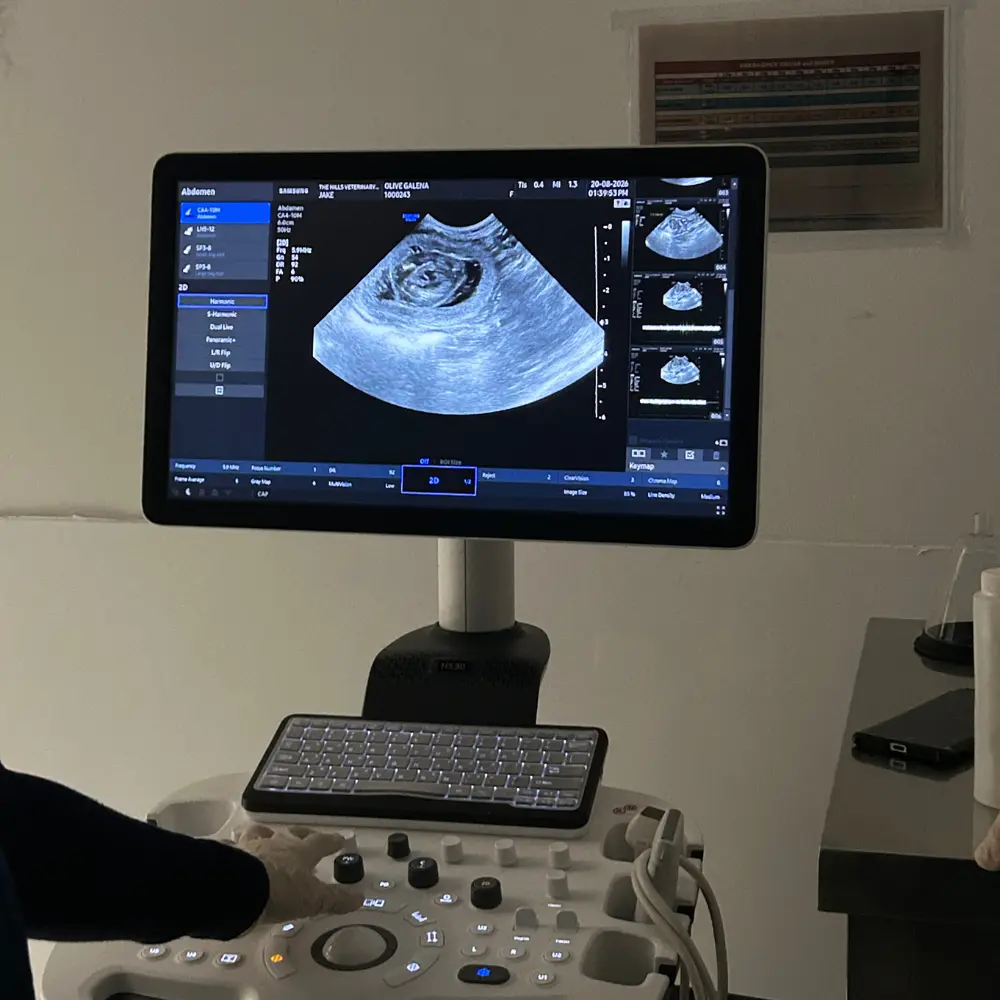
Ultrasound is a diagnostic imaging method that uses sound waves to create live images of structures inside your pet’s body. It can help the veterinarian assess soft tissues and organs that may not be clearly visible on a standard X-ray.
It may be recommended when a pet has abdominal discomfort, vomiting, unexplained weight changes, urinary concerns, swelling or abnormal blood test findings.
The results are reviewed together with your pet’s symptoms, medical history and physical examination. Your veterinarian will explain the findings and discuss whether treatment, monitoring or further testing is recommended.
Ultrasound helps our veterinary team investigate internal health concerns while keeping your pet’s comfort in mind.
Ultrasound creates images from outside the body and normally does not require a surgical procedure.
The technology uses sound waves rather than ionising radiation to create diagnostic images.
The veterinarian can view organs and certain internal movements as the examination is performed.
Ultrasound is especially useful for examining many abdominal organs and surrounding soft tissues.
Your veterinarian will explain the findings and what they may mean for your pet’s care.
The results can help guide treatment, monitoring or recommendations for additional investigation.
Our team will explain the procedure and handle your pet calmly throughout the appointment.
The veterinarian examines your pet, reviews the symptoms and decides which areas should be assessed.
A small area of fur may need to be clipped so the ultrasound probe can make proper contact with the skin.
Gel is applied to the skin and the probe is moved gently over the area while images are displayed.
Your veterinarian reviews the findings and explains any recommended treatment, monitoring or testing.
The need for imaging is determined by a veterinarian after reviewing your pet’s symptoms and condition.
To investigate certain causes of pain, swelling or sensitivity in the abdomen.
To assess internal organs when digestive symptoms continue or repeatedly return.
To examine the bladder, kidneys and surrounding structures when clinically appropriate.
To obtain additional information when laboratory results suggest an internal concern.
To help investigate weight loss or abdominal enlargement without an obvious cause.
To examine organs such as the liver, spleen, kidneys and urinary bladder.
Ultrasound may be used to assess pregnancy when recommended by the veterinarian.
Repeat imaging may help monitor changes in a previously identified condition.
Book a veterinary consultation at our Dubai Hills Estate clinic. Our team will examine your pet and advise whether ultrasound is suitable.